
 A specific soft tissue therapy, called Active Release Technique (ART), which engages movement of your body during treatment may be utilized. This is a revolutionary proven approach used to successfully diagnose and treat cumulative trauma disorders, whether short or long standing. It has been shown that the use of ART commonly provides 50% improvement after the first to third treatment (1) helping to "actively release" the involved area.
...It hurts so good!
Cumulative trauma disorders, also known as repetitive stress injuries or overuse syndromes, are major problems in the workforce, athletic population, musicians, as well as the general population. These syndromes are more commonly known as rotator cuff syndrome, tennis elbow, tendonitis, plantar fascitis, carpal tunnel, and chronic low back pain, to name a few.
A major problem with cumulative trauma disorders is the accumulation of adhesions, formed initially as a protective mechanism serving to limit the motion of the affected tissues to allow the damaged tissue to heal slowly. Unfortunately, the body does not always read its owners manual and the resulting adhesions are often laid down in different directions not following the direction of muscle action, which ultimately causes restrictions in free movement of your tissues. The other problem is that adhesions form sticky abnormal bands of tissue that grow together in an abnormal way. Adhesions develop between joints and stick or attach to muscles, ligaments, tendons, nerves, and blood vessels, resulting in restricted motion and or numbness or tingling if nervous structures are obstructed. As the tense soft tissue structures rub against each other, eventually, an injury occurs, which heals with inflammation and scar tissue formation (1).
Solution
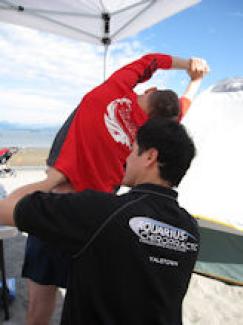 Ultimately, early assessment, diagnosis, and treatment of cumulative trauma disorders from everyday work and/or trauma from sports injuries is ideal; however, long standing adhesions complicated by joint dysfunction etc. can also be addressed. Once these adhesions are released, separated and broken up using ART, the underlying soft tissue will reestablish optimal texture, resilience, and proper function (1), becoming smooth allowing the muscles, ligaments, tendons, nerves, and blood vessels to move freely on each other. The powerful hands-on application of ART utilized to separate and break up these adhesions is an integral treatment strategy to fast relief.
At Aquarius Chiropractic, we personalize your care, formulating effective diagnosis and treatment strategies, beginning with the identification of the underlying causes and contributing factors as they uniquely pertain to you. Patients are treated according to their specific needs, goals and objectives. This may involve treatment at Aquarius Chiropractic alone, or may involve treatment in conjunction with another health professional. ART is a valuable technique for not only novice and professional athletes, but the workforce as well. Take control and actively release your pain, knowing that we are fully committed to providing quality non-surgical drug-free care.
References
- Leahy MP. Improved treatment for carpal tunnel and related syndromes. Chiropractic Sports Medicine. 9(1):6-9, 1995.